MRI Scan Full Body: Purpose, Procedure, Preparation & What You Should Know
Talk to Health Expert

Dr. Nikunj Jain
Co-Founder and HOD - Nuclear Medicine ,MBBS, DRM, DNB, FEBNM, FANMB, Dip. CBNC
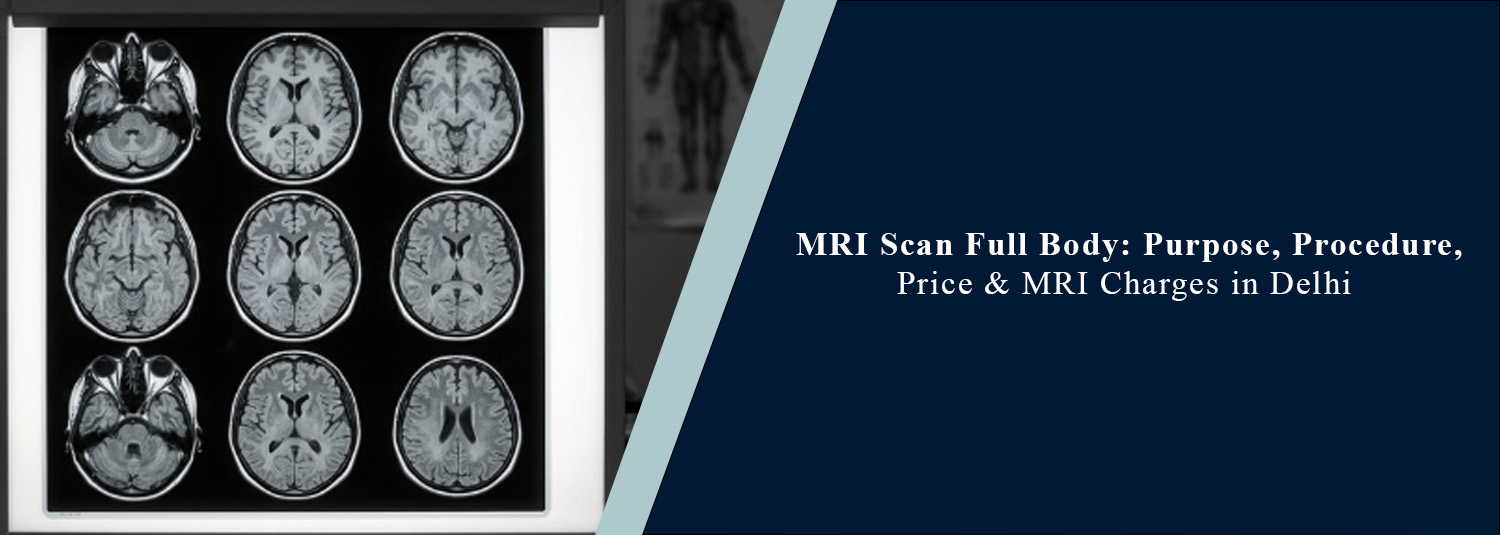
A full-body MRI scan is a sophisticated imaging test that combines
advanced magnetic field, radio wave, and computer technology to provide
detailed images of various body areas. MRI avoids the use of 'ionising radiation
', which is a method used with X-rays and computed tomography (CT scans); MRI
is an important imaging technique for many organs, soft tissues, muscles,
joints, bones and other structures.
In certain cases, if physicians require
information from several parts of the body or suspect certain symptoms or
medical issues, a Full Body MRI might be proposed. But it's not a test every
individual has to have. The choice of the MRI protocol will depend on the
indication for scanning, the clinical question to be addressed, symptoms, and
history. The high-tech diagnostic imaging services at Molecular Diagnostics andTherapy help ensure timely diagnosis and a deeper understanding of health
conditions.
What Is a Full Body
MRI Scan?
The Full Body MRI is an MRI examination
that scans a larger area of the body in one scanning session. This exam may
also cover the brain, the spine, the chest, the abdomen, the pelvis, bones,
muscles and other soft tissues as appropriate for the chosen protocol. MRI is
able to generate very detailed images of soft tissue and internal
structures.
MRI can be used to look at the liver,
kidneys, spleen, pancreas, bowel, bladder, and reproductive organs, and lymph
nodes and selected blood vessels. The exact body area scanned by a Full Body MRI
may vary depending on the type of MRI examination performed. A whole body
screening scan is also a different test from a special type of MRI scan used to
investigate a specific medical condition.
Why Is a Full Body
MRI Recommended?
In some patients, a Full Body MRI might
be recommended if doctors need to see details of multiple parts of the body.
Depending on the medical history and risk factors, it may be considered in
certain screening, diagnostic and/or follow-up circumstances. MRI may be
particularly helpful where detailed information about the soft tissues is
required. It can assist doctors to identify abnormalities in organs, muscles,
joints, spine, brain, blood vessels and other structures.
But a Full Body MRI scan is not meant
to look out for all of the multitude of diseases. Additional investigation,
like CT, ultrasound, X-ray, blood checks, or special investigative techniques
may be more useful in some cases. Therefore, the correct examination should be
chosen based on the medical requirement of the patient, as opposed to the use
of the widest available scan.
What Can a Full Body
MRI Detect?
The results that can be analyzed are
dependent on the areas sampled and the MRI protocol. MRI can be used to detect
abnormal soft tissue, organs, muscles, joints, bones, blood vessels, and other
internal tissue. Can be very helpful when used for the diagnosis of some
tumours, some inflammatory conditions, some structural abnormalities, some
muscular/bone disease, and other diseases. The results of a Full Body MRI can
offer a lot of information, but should always be analyzed with the patient's
symptoms and medical history in mind. If development is abnormal on an MRI,
this doesn't mean that they have a serious disease.
How Is a Full Body
MRI Performed?
The MRI staff will ask questions about
your medical history, past surgeries, implants, and/or anything with metal in
or on your body before the exam. The safety screening is an important component
of an MRI experience. Typically, jewelry, wrist rings, watches, and other metal
objects will be taken off before you enter the MRI room. You might also need to
change into a hospital gown in the centre.
You need to lie on a movable table
which will move into the MRI system during the examination. Although the space
around the patient will feel somewhat limited to open at both ends with the
MRI. The scanner emits a loud clicking, clacking or buzzing noise while images
are taken. Earplugs or headphones can be available to help make it more
comfortable. However, it is necessary to keep as still as possible during image
acquisition as any body movement may compromise image quality. Some sequences
may also require physically holding your breath for a short time.
Is a Full Body MRI
Painful?
MRI is normally a painless and
impartial examination. The magnetic field and the radio waves used to make the
images do not make a difference to you. Some patients find the most important
points about the procedure are staying still for a long time and staying in the
scanner. Individuals with anxiety or claustrophobia should discuss this with
the MRI team before the procedure to include arrangements. You can ask the MRI
technologist questions during the procedure; the technologist will be able to
talk with you; if you are uncomfortable, you can notify the team.
Is Contrast Used in
Full Body MRI?
Not all MRI exams need high or low
levels of contrast. A contrast agent may be needed in some cases as it will
give further information and help some abnormalities to be assessed more
easily. A gadolinium-based agent is usually the type of MRI contrast used.
Kidney disease, previous reactions to contrast, allergies, pregnancy, or other
medical issues should be noted by the medical team if they are taking into
account when using the contrast media. Contrast should be used based on
individual clinical needs and MRI protocol.
How Should You
Prepare for a Full Body MRI?
Preparation can vary depending on the type of MRI being performed. Some
examinations require little preparation, while others may include specific
instructions regarding food, drinks, or medications. Patients should follow the
instructions provided by the diagnostic centre and inform the MRI team about
any medical implants or devices before the examination.
It is especially important to mention pacemakers, implantable cardiac
devices, cochlear implants, medication pumps, neurostimulators, vascular clips,
or any history of metal fragments in the body. Some modern implants may be safe
for MRI under specific conditions, but the exact device information must be
checked before the scan. If you are pregnant or think you may be pregnant,
inform your doctor and the MRI team before the examination.
Is Full Body MRI
Safe?
MRI does not use X-rays or ionising radiation. When appropriate safety
procedures are followed, MRI is considered a safe diagnostic imaging technique
for most patients. However, MRI uses a very strong magnetic field. Certain
metallic objects and medical implants can create safety risks or interfere with
the examination. This is why proper screening before an MRI is extremely
important. Patients should never enter the MRI room without informing the
medical team about implants, devices, metal fragments, or other relevant
medical information.
What Are the Benefits
of Full Body MRI?
One of the major advantages of MRI is its ability to produce detailed
images of soft tissues without using ionising radiation. This makes MRI
particularly valuable for evaluating organs, muscles, joints, the brain, spine,
and other soft-tissue structures. A Full Body MRI can also provide information
about multiple regions of the body during one examination. In selected
patients, this can help doctors evaluate several areas when there is a clinical
reason to do so. Another advantage is that MRI can produce images in multiple
planes, allowing doctors to examine internal structures from different
directions.
Are There Any
Limitations?
Although Full Body MRI can provide extensive information, it is not
suitable for every medical condition. The quality of MRI images depends partly
on the patient's ability to remain still and follow instructions. Movement can
reduce image quality and may require some sequences to be repeated. Certain
implants or metal objects can also affect the images or make an MRI unsafe.
Another important limitation is that a Full Body MRI does not replace every
other diagnostic test. Depending on the suspected condition, a doctor may
recommend a targeted MRI, CT scan, PET-CT, ultrasound, blood test, or another
investigation.
What Happens After
the MRI?
Once the examination is completed, the images are reviewed by a
radiologist who has specialised training in interpreting medical imaging. The
findings are documented in an MRI report, which is then used along with the
patient's symptoms, medical history, physical examination, and other
investigations to understand the overall condition. In some cases, the radiologist
or treating doctor may recommend additional imaging or follow-up investigations
if a particular area requires more detailed evaluation.
Why Choose the Right
Diagnostic Centre?
The quality of an imaging examination depends on more than just the MRI
machine. Appropriate patient preparation, correct positioning, suitable imaging
protocols, image quality, safety procedures, and professional interpretation
all contribute to a useful diagnostic examination. Patients should choose a
centre that follows proper MRI safety procedures and provides appropriate
guidance before and during the examination. At Molecular Diagnostics andTherapy, patients can access diagnostic imaging services with attention to
examination requirements, patient safety, and the need for appropriate
diagnostic evaluation.
Conclusion
A Full Body MRI is a sophisticated non-invasive imaging test that can yield detail on multiple parts of the body. It does not involve ionising radiation and generates radio wave fields and magnetic fields; this is particularly useful for assessing soft tissues, organs, muscles, joints, brain, spine, and other internal parts and structures. The decision of a Full Body MRI is always the patient's and should not be based on protocol. Special preparation and MRI screening are key, especially concerning patients using implants, medical devices, or metal fragments. A patient's informed choice about his diagnostic care may be aided by understanding its purpose and its constraints. With proper care and an accurate imaging protocol, MRI can play a significant role in the diagnosis and treatment of a variety of medical issues.
Frequently Asked Questions
In News
Get Our Mobile App
for Easy Access
Book tests, view reports, and manage your health records on the go. Experience convenient healthcare with Molecular Diagnostics and Therapy.
- ✔ Book tests & home collection
- ✔ View reports instantly
- ✔ Track health history
- ✔ Get notifications & reminders
- ✔ Easy appointment management